Check out other Steel City Creative Services! Steel City Tap Co | Presto Embroidery

Why Silkscreen Printing Still Reigns Supreme: A Bold Defense of the Industry's Most Durable Print Method

Brad Luger

• 

Posted on April 04 2026

Let’s get one thing straight: digital printing is fantastic. It’s fast, it’s flexible, and it’s perfect for short runs and full-color photo reproductions. But if you think digital is about to dethrone silkscreen graphics printing? Think again.

Here at Classic Printing & Signs, we’ve been in the screen graphics game for decades, and we’re not slowing down. Why? Because when it comes to durability, material versatility, and real-world performance in the harshest environments on earth, silkscreen printing isn’t just keeping up — it’s leading the pack.

So grab your coffee, and let’s break down exactly why the screen graphics industry isn’t going anywhere.

Key Takeaways: Why Silkscreen Printing Still Leads

  • Unmatched durability: Silkscreen prints last 10–25+ years, even under extreme UV, chemical, and abrasion exposure.
  • Print on almost anything: Metals, plastics, glass, ceramics, wood, textiles, and irregularly shaped objects.
  • Superior ink opacity: Thick ink deposits deliver bold, vibrant colors — especially whites and metallics on dark substrates.
  • Specialty ink compatibility: UV-curable, epoxy, ceramic, and conductive inks that digital printers simply cannot use.
  • Proven in critical industries: Automotive dashboards, fire suppression labels, and industrial equipment rely on silkscreen for safety and longevity.

What Is Silkscreen Printing (And Why Should You Care)?

Silkscreen printing — also known as screen printing or serigraphy — is a process where ink is pushed through a finely woven mesh stencil onto a substrate. This technique allows for thick, even ink deposits that bond with the material at a molecular level.

That thick ink deposit is the secret weapon. It’s the reason silkscreen prints can survive conditions that would obliterate a digital print in a matter of weeks.

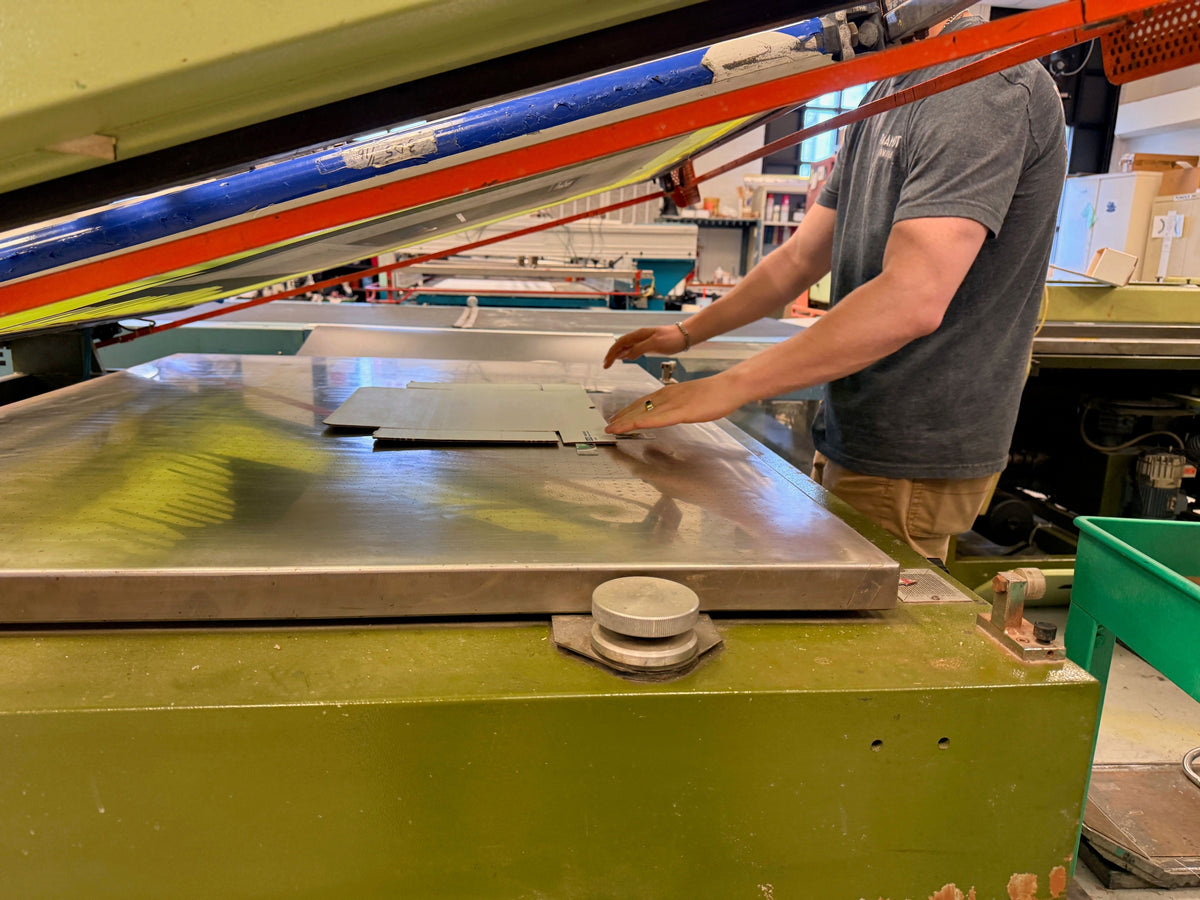
Industrial flatbed silkscreen press at Classic Printing and Signs producing high-durability screen-printed graphics on a large-format substrate, demonstrating the precision and scale of professional silkscreen production.

The Great Showdown: Silkscreen vs. Digital Printing

Durability That Goes the Distance

Digital prints use micro-droplets of ink sprayed onto a surface. They look great on day one. But expose them to UV light, chemical solvents, extreme heat, or constant abrasion? That beautiful print starts to fade, crack, and peel.

Silkscreen prints, on the other hand, are built to last. The ink sits thicker on the substrate, creating a resilient layer that resists fading, scratching, and environmental degradation. We’re talking years — sometimes decades — of vibrant, legible performance.

Material Versatility: Print on Almost Anything

Here’s where silkscreen truly flexes its muscles. Digital printers are largely limited to flat, smooth, specially coated surfaces. Silkscreen? We can print on metals, plastics, glass, wood, ceramics, textiles, and even irregularly shaped objects.

Need a graphic on a curved stainless steel panel? Silkscreen. Want a label that bonds permanently to powder-coated aluminum? Silkscreen. Trying to mark a polycarbonate lens for an industrial display? You guessed it — silkscreen.

Ink Opacity and Vibrancy You Can See From Across the Room

Because silkscreen deposits a significantly thicker layer of ink, the colors are more opaque, more vibrant, and more consistent across the entire print run. This is especially critical when printing white or metallic inks on dark substrates — a task where digital printing consistently falls short.

Specialty Inks for Specialty Jobs

Silkscreen printing is compatible with an incredible range of specialty inks that digital printers simply cannot handle, including UV-curable inks, solvent-based inks, epoxy inks, ceramic inks, and conductive inks for electronics applications. This versatility makes silkscreen the go-to method for industrial, automotive, and military-grade printing needs.

The Head-to-Head Comparison: Silkscreen vs. Digital Printing

Feature Silkscreen Printing Digital Printing
Durability Excellent — withstands UV, chemicals, abrasion, and extreme temps Moderate — prone to fading and wear in harsh conditions
Material Versatility Metals, plastics, glass, ceramics, textiles, wood, and more Primarily paper, vinyl, and specially coated substrates
Ink Opacity & Vibrancy Superior — thick ink deposit delivers bold, opaque colors Good for photos, but weaker on dark substrates
Performance in Harsh Environments Outstanding — engineered for extreme conditions Limited — degrades under prolonged exposure
Specialty Ink Compatibility UV-curable, epoxy, ceramic, conductive, solvent-based Primarily water-based and eco-solvent
Cost Efficiency (High Volume) Very cost-effective at scale Better suited for short runs
Print Longevity 10–25+ years depending on application 3–7 years typical outdoor life
Substrate Thickness Range Thin films to thick rigid materials Primarily thin and flexible media

Where Digital Printing Simply Can’t Compete: Real-World Applications

This is where the rubber meets the road — or more accurately, where the ink meets the metal, the flame, and the factory floor.

Automotive Control Panel Display Printing

Every time you glance at your dashboard, you’re likely looking at silkscreen printing in action. Control panel overlays, instrument cluster graphics, and switch plate markings in the automotive industry demand prints that can handle constant UV exposure through the windshield, temperature swings from subzero winters to scorching summers, daily finger abrasion from driver interaction, and chemical exposure from cleaning products.

Digital printing can’t deliver that level of resilience. Silkscreen prints on polycarbonate and polyester overlays are the industry standard because they perform flawlessly for the entire life of the vehicle.

Fire Suppression System Labeling

When a building is on fire, the last thing you want is a label that’s too faded to read. Fire suppression system labels, valve tags, and safety placards must remain legible after exposure to extreme heat and flame proximity, water and chemical fire suppressants, years of environmental aging, and smoke and soot accumulation.

Silkscreen printing with specialized inks on anodized aluminum or stainless steel substrates delivers the kind of permanence that saves lives. Digital labels in these environments simply wouldn’t survive.

Rugged Manufacturing and Industrial Solutions

In manufacturing environments — from oil refineries to food processing plants — equipment labels, safety signage, and control panel graphics take a daily beating. These prints are exposed to chemical solvents and cleaning agents, high-pressure washdowns, extreme temperatures, and physical impact and abrasion.

Silkscreen-printed graphics on durable substrates like Lexan, stainless steel, and anodized aluminum are purpose-built for these conditions. They remain clear, vibrant, and fully functional for years without replacement.

The Bottom Line: Silkscreen Isn’t Old School — It’s Proven School

Look, we get it. Digital printing is exciting, and it absolutely has its place in the world of print. Quick-turn banners, full-color marketing collateral, and short-run prototypes? Digital is a great choice.

But when the job demands industrial-grade durability, extreme environmental resistance, and flawless performance on tough materials, silkscreen printing is — and will remain — the undisputed champion. The screen graphics industry isn’t going anywhere.

Technician at Classic Printing and Signs washing out a silkscreen printing frame using a high-pressure spray, revealing the stencil pattern through yellow emulsion during the screen preparation process.

Ready to Print Like a Pro? Let’s Talk.

At Classic Printing & Signs, we specialize in high-performance silkscreen graphics printing for the most demanding applications in automotive, manufacturing, safety, and industrial sectors. Whether you need control panel overlays, durable decals, equipment labeling, or custom signage that’s built to endure, our team has the expertise and the equipment to deliver.

Don’t settle for prints that fade when the going gets tough. Contact Classic Printing & Signs today to discuss your next project and discover why our clients trust us for the prints that matter most.

Phone: 205-224-0829 | Email: info@classicprintingandsigns.com | Web: www.classicprintingandsigns.com

Classic Printing & Signs — Where Durability Meets Excellence.

Frequently Asked Questions About Silkscreen Printing

What is silkscreen printing?

Silkscreen printing (also called screen printing or serigraphy) is a printing process where ink is pushed through a finely woven mesh stencil onto a substrate. It produces thick, durable ink deposits that bond with the material at a molecular level, making it ideal for applications requiring long-lasting graphics.

How long do silkscreen prints last?

Silkscreen prints typically last 10–25+ years depending on the application, substrate, and ink system used. In protected indoor environments, they can last even longer. By comparison, digital prints typically last 3–7 years in outdoor applications.

What materials can you silkscreen print on?

Silkscreen printing works on a wide range of materials including metals (aluminum, stainless steel), plastics (polycarbonate, Lexan, acrylic), glass, ceramics, wood, textiles, and even irregularly shaped objects. This versatility far exceeds what digital printers can handle.

Is silkscreen printing better than digital printing?

It depends on the application. Silkscreen printing excels in durability, material versatility, ink opacity, and harsh-environment performance — making it the preferred choice for industrial, automotive, and safety applications. Digital printing is better suited for short runs, full-color photo reproductions, and quick-turnaround marketing materials.

What industries use silkscreen printing?

Silkscreen printing is widely used in automotive (control panel overlays, instrument clusters), manufacturing (equipment labels, safety signage), fire safety (suppression system labels, valve tags), electronics (circuit board printing with conductive inks), military and defense, and commercial signage.

What types of specialty inks can be used with silkscreen printing?

Silkscreen printing supports UV-curable inks, solvent-based inks, epoxy inks, ceramic inks, and conductive inks for electronics — all of which are incompatible with standard digital printing equipment.